Collagen supplements are one of the newest buzzwords in the industry of health and beauty. We even see collagen creams and supplements in grocery stores, too. They all have one common claim, the youthful appearance of skin and some other health benefits for the years to come.
So what is it? Is collagen only good for the skin? does it help muscle building and can reduce the risk of heart disease? Before learning all this, we will first discuss what is collagen and why it has such a major role in our lives.
Research Highlights
What is Collagen?
Collagen is the most abundant protein in your body, comprising up to 30% of the total protein count. In other word, it is like a glue to your body, holding up your body cells.
From tendons to gums, collagen protein is the main component of the vast majority of your body’s soft and hard tissues. Not only does it line blood vessels, corneas, and teeth, but it is also present in skin, ligaments, bones, and teeth.
Types of Collagen
There are almost 28 different types of collagen in nature, but only 5 of them are primary in their function. They include:
- Type 1: One of the most abundant in the human body. It is found in skin, skeleton, connective tissue, fibrous cartilage, and walls of blood vessels. Even scar tissue contains this collagen and of all the other collagens, this one is associated with skin aging (fine lines, wrinkles, etc.)
- Type 2: Mainly found in bones, cartilage, and joints.
- Type 3: This type is found in the digestive tract. On top of that, it aids in the development and maintenance of our skeletal muscles, internal organs, and circulatory systems
- Type 4: Less abundant as compared to types 1 and 3 but mainly associated with kidney and other organ functioning. Also aids in wound healing.
- Type 5: This type is less common in the body, but a small quantity of it is in the hair, cornea of the eye, placenta, and some layers of skin during pregnancy.
How Does it Work?
While the exact mechanism of its working isn’t very much known, it has been established that collagen breaks down into its component amino acid and peptide chains. The body absorbs these amino acids and peptide fragments released into the circulation as the digestive system breaks down collagen.
Subsequently, this causes the skin to produce collagen on its own.
How Aging Effects Collagen Production in the Body

As babies, kids, and teens grow, their bodies make a lot of collagen rapidly. That’s one reason their skin is so smooth and free of lines.
But aging can have a negative effect on collagen production. After the age of 20, its production in the skin declines by around 1% per year.
While there is no diagnostic test to measure collagen levels, there are certain signs that may indicate that you may have low levels of collagen in your body.
- Loose, saggy, or wrinkly skin
- Hallowing around the eyes/face
- Reccurrent muscle pains and loss of muscle mass
- Loss of movement due to joint pains
- GI tract pain due to thinning of the lining of the stomach.
How to Prevent Collagen Loss from The Body
Even though collagen synthesis normally diminishes with age, there may be ways for people to stimulate their bodies to produce more.
Collagen formation is significantly impacted by cigarette smoking, heavy alcohol use, a diet heavy in ultra-processed foods, and added sugar. On the other hand, choosing a healthy lifestyle by eating nutrient-dense foods, not smoking, and not drinking to excess can surely limit skin deterioration.
Decrease the AGEs: One dietary strategy that has shown promise in supporting skin health is reducing the intake of advanced glycation end products (AGEs). Toxins, known as AGEs, build up in the skin. They have the potential to deactivate proteins that are necessary for collagen repair and cause collagen to become rigid. AGEs are found in processed meat products like hot dogs and bacon, fried foods like french fries and fried chicken, and roasted and grilled meats. So the best strategy is to avoid it, protecting collagen storage and preventing damage and loss. This may be achieved by eating a diet rich in plant-based foods, including fruits and vegetables, and consuming high-quality protein.
Increase Collagen Promoting Foods: Because your body is unable to absorb collagen in its complete form, consuming foods that are high in collagen will not raise your body’s collagen levels. Your body breaks down collagen-rich foods into their individual amino acids when you consume them. So it is always better to eat foods that promote collagen formation. They include these nutrients and their best sources,
| Nutrient | Food Sources |
|---|---|
| Vitamin C | Strawberries, Oranges, Broccoli, Bell Peppers, Potatoes |
| Proline | Mushrooms, Asparagus, Cabbage, Wheat, Peanuts, Egg Whites, Fish, Meat |
| Glycine | Red Meats, Chicken and Pork Skin, Turkey, Granola, Peanuts |
| Copper | Oysters, Lobsters, Liver, Shiitake Mushrooms, Leafy Green Vegetables, Nuts and Seeds, Tofu, Dark Chocolate |
| Zinc | Oysters, Milk Products, Poultry, Pork, Red Meats, Nuts, Beans, Chickpeas, Whole Grains, Broccoli, Green Leafy Vegetables |
Use Collagen Supplements: Collagen is manufactured by the body using amino acids, which are found in protein-rich foods. However, due to its composition of closely packed, long fibers, collagen in its native state is indigestible. That is when using collagen supplements comes into play.
Types of Collagen Supplements
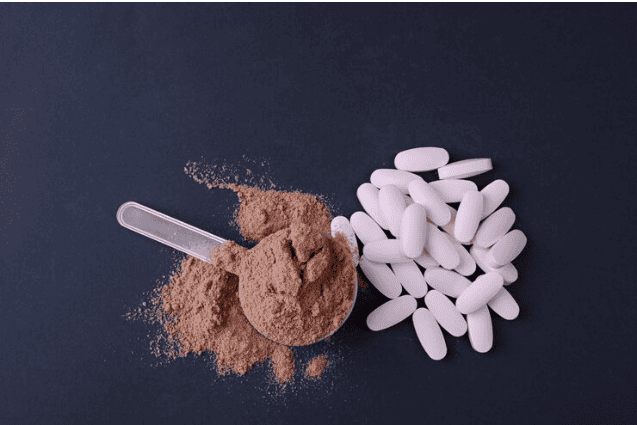
The three main kinds of collagen—types I, II, and III—found in your body are often included in collagen supplements. To make collagen supplements, the protein is extracted from various animal tissues, such as fish skin or cattle bones. When thinking about these supplements, it’s not enough to just be familiar with the many kinds of collagens. We will explore the types that are usually available in the market,
1. Collagen Peptides
Our native collagen does not get absorbed by the body easily, so it is broken down in smaller parts, known as hydrolyzed collagen. These are gentler on the digestive system due to their partial hydrolysis into shorter chains of amino acids. They are also known as collagen peptides.
2. Powdered Collagen
Powdered collagen supplements are an alternative to capsules. If you find it difficult to swallow tablets, collagen powder may be a better option for you. Blending the powder into a beverage or smoothie is a convenient option for some.
3. Marine Collagen
Collagen from marine sources is derived from fish scales, skin, and bones. Many consider this collagen to be the best option for bolstering skin and bones. Marine collagen, type I collagen, is well-known for its high collagen concentration and excellent absorption by the body; it gets to work faster than bovine collagen.
4. Vegan Collagen
Vegan collagen supplement is a new term. Vegans can choose from a variety of collagen supplements derived from genetically engineered yeast and bacteria. It actually doesn’t contain collagen, as the main sources of collagen are human and animal sources. In its place, you’ll find collagen-building amino acids and collagen-supporting vitamins, such as vitamin C, in these supplements.
5. Collagen Drinks
Premade collagen beverages or collagen powder to mix with your favorite drink are also available for purchase. A wide range of tastes and varieties are available. In addition, many of them contain additional helpful components.
Here’s a comparison table summarizing the absorption and characteristics of different collagen sources:
| Type of Collagen | Source | Absorption Level | Key Characteristics |
|---|---|---|---|
| Animal Collagen | Bovine/Porcine | High | Rich in types I, II, and III; well-absorbed. |
| Marine Collagen | Fish (skin/scales) | Very High | Smaller peptide size; superior bioavailability; effective for skin health. |
| Plant Collagen | Plant compounds | N/A | It does not provide collagen directly; it promotes collagen synthesis in the body. |
Most of these collagen supplements contain flowing nutritional details.
| Nutrient | Amount per 14 grams of Collagen Peptide Powder |
|---|---|
| Calories | 50 |
| Protein | 12 grams |
| Fat | 0 grams |
| Carbohydrates | 0 grams |
| Fiber | 0 grams |
| Sugar | 0 grams |
| Calcium | 29 milligrams |
| Sodium | 44.9 milligrams |
| Potassium | 0.98 milligrams |
Additionally, collagen has eight of the nine essential amino acids, and that collagen supplements can count towards your daily protein needs, but only up to a certain point.
What is Better? Collagen peptides or Powdered?
You can also get collagen supplements in the market as collagen pills, collagen shots, liquid collagen, collagen powder, collagen serum, collagen cream, and collagen sweets that you can chew on, and even powders of collagen that you can mix with drinks.
Collagen supplements have recently grown in popularity, although their efficacy is still up for discussion among scientists. Although there are those who think that tablets are the best way to distribute medication overall, most people find that powdered drugs are easier to take. But as long as the collagen dosage is the same, they are considered to be just as effective.
Top Benefits of Collagen Supplements
Collagen has many benefits, from skin to muscles, and even many other industries rely on it. But here we are discussing its top research-based benefits for the human body.
Collagen Supports Skin Health
Roughly one-third of our skin is made up of collagen. But as we age, its production diminishes, and we reduce the quality and quantity we used to have. Our skin becomes dry and rigid in such cases.
But there is a growing body of evidence that shows that collagen supplements can work great for aging skin. It is probably the most studied benefit of collagen and is supported by some scientific research as well.
As per a study done in 2014, 15% of women who took collagen beauty drinks for 60 days saw fewer wrinkles and fine lines on their faces. Even a review of 19 studies, including 1,125 people (95% women) between the ages of 20 and 70, showed that taking hydrolyzed collagen helped skin elasticity, wrinkles, and moisture more than placebo.
Another study published in the Journal of Cosmetic Dermatology proved that by supplementing for eight weeks with 10 grams of collagen, many women saw improvements in their skin’s moisture and elasticity. In another analysis of 26 studies, enhancements in skin elasticity and moisture were observed after 4–12 weeks of consuming 1–12 grams of this protein.
In addition, there are several unverified reports claiming that collagen supplements can help ward off acne and other skin problems. But they haven’t been proven effective yet.
So what’s the perfect dosage? Research on the topic of collagen dosages has shown mixed results, with the majority of studies recommending 2.5–15 grams daily for at least eight weeks to see improvements in skin health.
Potentially Good for Bones

Likewise, with the use of collagen for skin, some research has also been done on its use in bone-related conditions.
Its effect on bone mineral density was studied in 105 postmenopausal women who took 5 grams of collagen supplement for one year daily. Improvements were seen in the bone mineral density (BMD) of the spine and femur as compared to the women who did not take any supplements. Another follow-up study was done on the same population that kept the dosage the same for 4 years and was associated with a progressive increase in BMD.
This shows that long-term usage of these supplements can be great for postmenopausal women who are at risk of bone weakening and osteoporosis.
Keeping the recent data in mind, another research study also concluded that oral supplementation greatly reduced the risk of osteoarthritis symptoms.
While these studies focused on postmenopausal women, their efficacy in other populations is still under review and one may not expect the same benefits from these supplements.
It has also been studied to improve joint health. It has been well-established that collagen keeps cartilage (the tissue that covers bones and joints) in good shape. When collagen levels drop, the chance of getting degenerative joint diseases like osteoarthritis goes up. However, collagen supplements have the potential to alleviate joint discomfort and enhance osteoarthritis symptoms generally. (1)
May Boost Muscle Bulk
As told earlier, it is the most abundant protein in the body and plays its role in muscle mass as well. As per research done on older men suffering from sarcopenia (age-related muscle mass reduction). They were given 15 grams of collagen along with strength training exercises for 12 weeks. A marked improvement in muscle growth and mass was seen as compared to those who did strength training alone.
Improves Heart Health
Atherosclerosis is a condition in which the arteries become hard and more susceptible to heart disease. But now one study claims that it can be treated with collagen supplements.
Another study of 12 independent trials on collagen supplement and heart health indicated that taking collagen supplements enhanced several measures of heart function. Taking daily collagen supplements helped to reduce blood pressure and cholesterol.
Still, a lot of research into the link between collagen in the diet and cardiovascular health is required.
Can be Beneficial for Hair and Nails
A 2014 American study found that daily oral collagen supplements improved hair and nail health in 54 women aged 26-68. After 8 weeks, 80% of participants experienced reduced nail cracking and brittleness, while hair dullness, dryness, and nail softness improved. A longer 60-week trial showed 100% improvement.
Researchers in 2017 found that daily collagen supplementation helped patients with brittle nail syndrome. After 24 weeks of supplementation, there was A 12% increase in nail growth and a 42% decrease in nail breakage was seen in the study population.
It is not only beneficial for the skin but for nails as well. Its supplementation has been found good for,
- Reduce Hair damage: It has the ability to restore damage to hair and make it stronger by preventing dryness and thinning.
- Reduce greying of hair: Since the hair follicles are responsible for producing the pigment that gives hair its colour, applying collagen lotion to the scalp can help thinning hair appear thicker and less dry. Furthermore, collagen supplements forestall the graying and thinning of hair that comes with becoming older.
May Help With Weight Loss
There is currently no evidence to support the claim that collagen aids weight reduction via increasing metabolic rate, although the theory has been around for a while.
However, a 2019 study published in the Marine Drugs journal revealed that a particular form of collagen derived from skatefish can decrease human body fat accumulation.
The Right Dosage of Collagen Supplement
Collagen supplement dose recommendations are product-and person-specific and should be carefully considered when making dietary and supplementation decisions. The standard recommendation for collagen peptide supplements is 10–20 grams, or one to two scoops, daily, diluted with water or blended into a smoothie or other drink.
Additionally, you can look at the label in which the manufacturer may have specified a greater or lower dose for their product.
Adding collagen to your diet is usually a good idea, but you should still see your healthcare providers first.
Although collagen has unmatched anti-aging effects on the skin, the key to achieving your maximum lifetime potential lies with longevity supplements that feed your body from the inside out. When should we start taking these? Luckily we have a post about it. Read it here.
Side effects of Collagen Supplements
As a genera concept, collagen supplements are safe to be consumed by people. On the other hand, adverse effects are always a possibility with any kind of drug or nutritional supplement. They include the following,
- Nausea if taken in a large dose at once
- Gas, bloating, and stomach discomfort can occur if a large dose is taken or if sensitivity or intolerance with collagen supplements.
- Collagen supplements may also interact with medications, including those used to treat diabetes, nonsteroidal anti-inflammatory drugs (NSAIDs), and blood thinners. To be sure these are safe to take with any drugs you may be taking, it’s best to see your doctor before beginning treatment.
- Certain group of people must exercise caution when using collagen supplements, they include pregnant or breastfeeding ladies, people with allergies and sensitivities and ne with some serious health conditions.
All these above-mentioned side effects are not experienced by everyone who consumes the supplement. All of these can be avoided with the proper usage mentioned. Also, the best is to get your doctor’s approval before taking collagen peptides again if you’re worried about side effects or have any questions regarding their use.
Another thing is collagen supplements are not subject to regulation by the Food and Drug Administration. That being said, there is no assurance that the collagen supplement you purchased includes the specific type or quantity of collagen stated on the label.
Effective Timeline of Collagen
6 weeks: Intake of collagen powder for 6 weeks at the dosage of 1g treatment significantly enhanced hair regrowth.
2 months: After intake of 20 grams of collagen for 8 weeks, many subjects reported improvement in their nail, skin, and hair health.
3 months: 2 g of collagen intake for 12 weeks has been found to have anti-obesity effects through the suppression of fat accumulation.
It has also been found to improve muscle bulk after dosage of 15 grams for 12 weeks (3 months)
6 months: Intake of 2.5 grams of collagen daily was proven to be effective for the treatment of nail brittleness.
1 year: Intake of collagen (5 grams daily for a year) can increase bone mineral density (BMD) in humans.
Summing Up
Collagen is indeed a magical biomolecule, as it forms the basis of skin, bones, jointsand several other tissues in our body. Over time, the body slows down its production of collagen, which exposes us to early signs of aging and joint pain.
To reverse this process, you can add collagen supplements to your diet plan to ensure your body gets adequate amino acids, hence promoting the formation of skin muscles, cartilage, healthy bones/joints, and other body tissues to support digestion and heart complications.
Of course, the studies on collagen supplementation are rather recent. However, the available data is rather convincing; therefore, incorporating a high-quality collagen supplement into the wellness program is a powerful step to support the body and to save it from premature aging. So why not incorporate collagen into your regimen to achieve optimal body health?